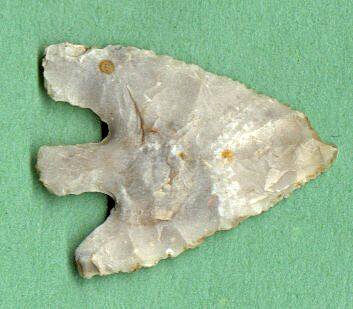
Small Find – Barbed and Tanged Arrowhead
Wordwell, King's Forest, Suffolk
This exceptional flint arrowhead was picked up during systematic forest-walk survey number 18, conducted within the pine compartments of Wordwell, Suffolk. It is a classic, finely flaked example of the barbed and tanged lithic tradition, highly diagnostic of the late Chalcolithic and Early Bronze Age horizons in Britain (circa 2400–1800 BCE, or roughly 4,000 years before present). This specific morphology is intimately associated with the classic 'Beaker' package—an archaeological assemblage including highly decorated Bell Beaker ceramics, copper daggers, and stone wristguards, which are frequently recovered from high-status burials beneath early round barrows across the Breckland landscape.
The surface findspot for this arrowhead was located on the elevated sandy uplands of the King's Forest. Intriguingly, the material selection of the flint is completely distinct from the domestic knapping debitage and core reduction material that comprised the rest of the collection from field-walk 18. This lithic variation strongly suggests that the weapon component was manufactured elsewhere using an exotic, high-grade flint source, rather than being knapped on-site. Given its isolated upland context on the sandy terraces, it is highly probable that this piece represents an active tool loss sustained during a prehistoric hunting expedition across the wildwood margins.
The Beaker Archaeogenetic Horizon
Since the initial recording of this find in 2006, our understanding of the human populations associated with the Bell Beaker culture has been completely transformed. A revolutionary synthesis of extensive ancient DNA (aDNA) mapping and isotope analysis has settled the centuries-old debate regarding whether the Beaker package represented merely a spread of ideas and trade networks, or a physical movement of people.
We now know definitively that the introduction of these diagnostic barbed and tanged arrowheads coincided with a profound wave of immigration into the British Isles. Arriving from continental Europe, these populations brought a massive genetic influx of Steppe-related ancestry (descending ultimately from the Yamnaya horizons of the Eurasian Steppes). This demographic shift resulted in a near-total replacement of the Neolithic British gene pool within a few centuries. Objects like this Wordwell arrowhead are the material markers of this major population transition.
- Parish/Location: Wordwell, St Edmundsbury District, Suffolk (King's Forest Horizon).
- Context: Systematic Forest-Walk Survey 18 (Upland Sand Terrace / Compartment Level).
- Typology: Late Neolithic / Early Bronze Age Transitional Horizon (c. 2000 BCE).
- Associated Local Monuments: Grouped within the wider prehistoric hunting and burial landscape bordering the River Lark catchment and nearby Bronze Age round barrow groups (cf. MSF2560).