Flint Flakes Tour
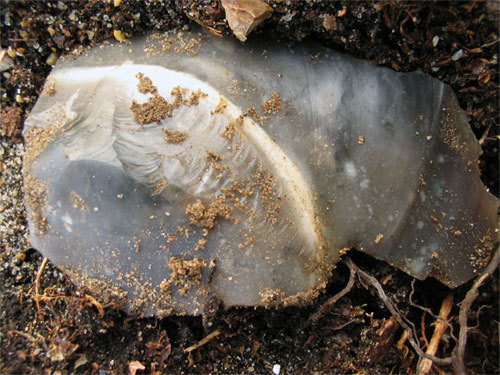
Flake of Struck Flint in Situ
A close-up macro shot of a typical late prehistoric flake of struck flint sticking out of the side of a furrow. The flake is lying on its dorsal surface, exposing the ventral face. Note the patterns in the raw material. This flake has a very prominent bulbar scar, and ripples towards the blunted distal end – it was hit fairly hard by a hammerstone. Blunted distal ends leave scars called hinge fractures on the dorsal surfaces of later removed flakes, or on a waste core itself. It is generally seen as a sign of poor or hurried knapping. Hinge fractures occur increasingly in Bronze Age and Iron Age lithic assemblages.