Field Walking
Surface Collection Survey – A Method
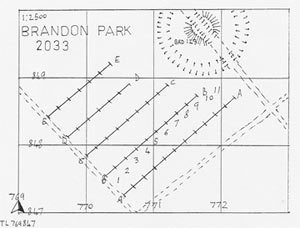
The chief method of investigation used during this project is surface collection survey, better known in the UK as fieldwalking. This should not be confused with the practice of collecting artefacts for private display or personal curiosity.
Fieldwalking is a systematic archaeological method used to sample artefacts lying on the surfaces of exposed and disturbed soils. It allows us to detect previously unrecorded sites and map shifting patterns of past land-use across an entire landscape. While practised extensively by professional units, it remains a vital and highly effective method for amateur and voluntary field archaeologists.
Whereas archaeological excavation produces exceptionally high-quality, stratigraphical information from a highly confined area, surface collection produces extensive quantitative evidence across a much broader landscape scale. This becomes especially powerful when combined with complementary field methods such as earthwork surveys, aerial photography, geophysical data, historic cartography, and documentary research.
The primary aim of most fieldwalk surveys is to identify and record unknown archaeological sites. Persistent clusters of surface finds – such as fragments of worked flint or sherds of abraded pottery – often act as a direct indicator of intact features surviving in the subsoil. By systematically searching cultivated fields, voluntary fieldworkers contribute critical new entries to the public record every year.
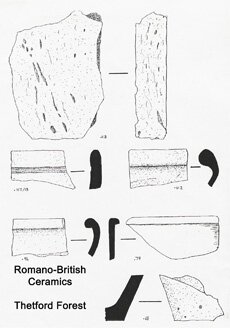
Crucially, fieldwalking only carries true scientific and archaeological value if it is executed with methodical discipline. For anyone considering taking up fieldwalking, key requirements include:
- Landowner Permission: Explicit permission must always be secured before entering any land.
- Methodological Justification: A clear research design and methodology must be established, including a formal justification for removing any diagnostic artefacts from their topsoil contexts.
- Secure Public Recording: Every single find spot must be accurately recorded using the Ordnance Survey National Grid Reference (NGR) system and deposited with a secure public record — the local county Historic Environment Record (HER). Portable finds should also be reported via the local Finds Liaison Officer (FLO) to the Portable Antiquities Scheme (PAS).
- Dissemination & Publication: Survey results should be formally compiled and published so the new data can be accessed by the wider archaeological community.
- Deposition: Once diagnostic analysis is complete, assemblages should ideally be deposited in a registered public museum or archive repository.
The Three Primary Methodologies
- Grid-walking: Dividing an entire field surface into regular, measured squares (often 20m or 50m grids) to conduct a 100% total collection. It allows for detailed spatial distribution analysis and is typically undertaken by large teams from local societies.
- Linear-walking: Parallel transects laid out across the field at regular intervals (e.g., 20m apart), divided into fixed lengths called 'stints'. This linear approach is the core methodology utilized throughout the Thetford Forest Survey.
- Reconnaissance-walking: Walking across exposed ground without a fixed spatial structure. Useful for initial rapid scoping, but lacking the statistical rigour required for modern landscape analysis.
Archaeological Responsibility
For anyone considering taking up fieldwalking, I would strongly urge you to weigh the ethical responsibility that comes with pulling an artefact from the ground. There are clear rescue contexts – such as impending commercial development or severe deep-ploughing – where topsoil finds are facing imminent destruction, making surface recovery entirely justifiable.
However, you must always ask yourself: What is the justification for removing this piece from its landscape context? What historical question are we trying to answer? How will the spatial record of this find be secured for future generations? Stripping artefacts from a landscape without answering these decisions is not archaeology – it is simply egg-collecting.